‘On his deathbed, they say, Leonardo da Vinci regretted that he had left so much unfinished.’
Procrastination. Something I know intimately, as I suspect do many other writers. Although I’ve come to accept it as an integral—and perhaps necessary—part of the creative process, I still often berate myself for wasting time and not getting on with the task at hand. Since reading this delicious essay How to Procrastinate Like Leonardo da Vinci by W A Pannapacker, however, I’ve decided to stop with the scolding and embrace my “inner procrastinator”, because ‘Leonardo, it seems, was a hopeless procrastinator ... ’ and who am I to argue with Leonardo?
‘Of course, the therapeutic interpretation of Leonardo—and, perhaps, of many of us in academe who emulate his pattern of seemingly non-productive creativity—has a long history. Leonardo’s reputation spread at exactly the right time for someone to become a symbol of this newly invented moral and psychological disorder: procrastination, a word that sounds just a little too much like what Victorian moralists used to call “self-abuse.”
The unambiguously negative idea of procrastination seems unique to the Western world; that is, to Europeans and the places they have colonized in the last 500 years or so. It is a reflection of several historical processes in the years after the discovery of the New World: the Protestant Reformation, the spread of capitalist economics, the Industrial Revolution, the rise of the middle classes, and the growth of the nation-state. As any etymologist will tell you, words are battlegrounds for contending historical processes, and dictionaries are among the best chronicles of those struggles … ’
Read the rest of W A Pannapacker’s article on the Arts & Letters Daily website.
26 February 2009
22 February 2009
The View From There
In the second half of last year I worked on an international project called The View From Here. My contribution is a 12-minute radio script called Eyewitness Blues, and I'll probably put a short excerpt from it on this blog post its BBC broadcast. This is an edited version of information on the project website.
The View From Here is a collaboration between London’s Slade School of Fine Art, the Bartlett School of Architecture and the BBC. It explores notions of cultural translation and trans-positioning by artists working in different media, drawing from the 3 key project terms: transmit, translate, transmute.
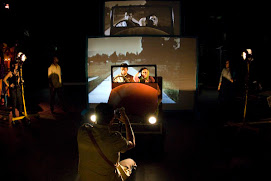
For Transmit 4 visual artists, from Australia, China, Israel and Uganda, each filmed a 12-minute video in a locale connected to their work, under the title The View From Here. These works were then sent to a writer in the artist's country to author a radio drama inspired by it. These 12-minute dramas have been recorded for broadcast on the BBC World Service on 28 February 2009 in the final stage of the project. The artists are: Barbara Bolt (Australia), Xioapeng Huang (China), Shuli Nachshon (Israel), and Daudi Karungi (Uganda). The writers are: Noëlle Janaczewska (Australia), Dinos Chapman & Simon Wu (Hong Kong/UK), Katie Hims (Israel/UK) and Charles Mulekwa (Uganda).
Translate: Eleven PhD students from the Slade and Bartlett made a series of works, in response to either those 4 works or the theme. The works will further inspire other students, invited to the event as respondents, to reshape, translate, transpose the original works through a text/image/audio/performance piece of their own.
Transmute is a combination of a BBC Broadcast and a Live Event on the 27 February. This final event will combine the broadcast, the original films and the resulting re-interpretations.
It's all happening at the Slade Research Centre, Woburn Square, London WC1.
The View From Here is a collaboration between London’s Slade School of Fine Art, the Bartlett School of Architecture and the BBC. It explores notions of cultural translation and trans-positioning by artists working in different media, drawing from the 3 key project terms: transmit, translate, transmute.
For Transmit 4 visual artists, from Australia, China, Israel and Uganda, each filmed a 12-minute video in a locale connected to their work, under the title The View From Here. These works were then sent to a writer in the artist's country to author a radio drama inspired by it. These 12-minute dramas have been recorded for broadcast on the BBC World Service on 28 February 2009 in the final stage of the project. The artists are: Barbara Bolt (Australia), Xioapeng Huang (China), Shuli Nachshon (Israel), and Daudi Karungi (Uganda). The writers are: Noëlle Janaczewska (Australia), Dinos Chapman & Simon Wu (Hong Kong/UK), Katie Hims (Israel/UK) and Charles Mulekwa (Uganda).
Translate: Eleven PhD students from the Slade and Bartlett made a series of works, in response to either those 4 works or the theme. The works will further inspire other students, invited to the event as respondents, to reshape, translate, transpose the original works through a text/image/audio/performance piece of their own.
Transmute is a combination of a BBC Broadcast and a Live Event on the 27 February. This final event will combine the broadcast, the original films and the resulting re-interpretations.
It's all happening at the Slade Research Centre, Woburn Square, London WC1.
08 February 2009
Watching the Lorikeets
Their rowdy chatter wakes me up in the morning, and at dusk, when they return, I sit on the balcony and watch them. Until the dark enfolds them and they're lost to view.

Ferdinand Bauer: Rainbow Lorikeets, 1802
I knew absolutely nothing about rainbow lorikeets when they first caught my attention, but after a couple of trips to the library, a few book purchases, and a lot of looking, I'm a lot better informed—not only about lorikeets, but the parrot family more generally. This research has led me into some interesting areas and, as random, freewheeling research so often does, it's also given me ideas, stories, and material for other projects. One of which is a 7-ON commission for ABC Radio National. We've all been asked to write a half-hour radio script on the theme Old Texts Revisited. We can interpret 'texts' broadly, the only proviso being whatever text/s we chose to work with must predate the invention of radio. Being obsessed with maps, I was intending to look to cartography to supply my 'text', but now, thanks to these birds, I'm going to use something quite different.
30 January 2009
australianplays.org
Check out the new website australianplays.org, which is promoting the work of local playwrights at home and abroad.
26 January 2009
From Taishō Chick
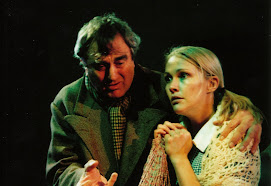
This is an excerpt from Taishō Chick, a cabaret/spoken word piece I wrote for Asako Izawa as part of the Art Gallery of NSW 2008 exhibition Taishō Chic. It came to mind as I began thinking about Shop Girl, another short script I'm writing for Asako and koto player Satsuki Odamura. Shop Girl is the story of a Japanese woman who defects to North Korea, hoping to find movie stardom in the Stalinist state. It's evolved from a creative development we did a couple of years ago (funded by the Theatre Board of the Australia Council and Sydney University Department of Performance Studies) and from my enduring interest in North Korea. Our plan is to produce Shop Girl in 2009.

Here's that excerpt from Taishō Chick:
…
In times of change I open the dictionary.
Not literally, but to open a crease in the language and reveal what we couldn’t say yesterday
in public
we drummed out syncopated rhythms with chopsticks. Drew cartoons with cold coffee on table tops.
Painting was my way of walking into the heart of the world without anybody knowing I was shy.
A taxi over the bridge, a little avant-garde introspection in the shade of the willow trees, and rice riots—that’s rice, R-I-C-E, not race. The poor were being bossed around by the high cost of rice.
For the not-so-poor
It was the age of silk stockings, foxtrots and all that jazz.
Of department stores and opinions—remember, long before the iPod brought music to our ears, the I-novel brought us first-person narratives.
I look for myself
and find
a café waitress lining up her future. Irie Takako starting her own film production company. Journalists reporting the latest from Paris or Shanghai. Young men in suits tailored British style.
And the key to all this activity?
The city.
The adventures and affairs of the metropolis …
Here's that excerpt from Taishō Chick:
…
In times of change I open the dictionary.
Not literally, but to open a crease in the language and reveal what we couldn’t say yesterday
in public
we drummed out syncopated rhythms with chopsticks. Drew cartoons with cold coffee on table tops.
Painting was my way of walking into the heart of the world without anybody knowing I was shy.
A taxi over the bridge, a little avant-garde introspection in the shade of the willow trees, and rice riots—that’s rice, R-I-C-E, not race. The poor were being bossed around by the high cost of rice.
For the not-so-poor
It was the age of silk stockings, foxtrots and all that jazz.
Of department stores and opinions—remember, long before the iPod brought music to our ears, the I-novel brought us first-person narratives.
I look for myself
and find
a café waitress lining up her future. Irie Takako starting her own film production company. Journalists reporting the latest from Paris or Shanghai. Young men in suits tailored British style.
And the key to all this activity?
The city.
The adventures and affairs of the metropolis …
18 January 2009
Guerrilla Gardens
Something’s happening in the beds of Pyrmont. Someone’s filling them with herbs and vegetables. Probably several someones in fact, and they’re doing it in several park beds. Some of these plots are down to the Pyrmont and Ultimo Landcare Group, but there are other intriguingly anonymous ones sprouting silver beet, tomatoes, curly parsley, and of course, marigolds to deter the bugs.

Pyrmont is an inner city suburb of apartments and recent redevelopment a hop, skip and jump from the Sydney CBD. Many of us live in units with garden areas shared by the whole building. Gardens designed and laid out when our blocks of flats were constructed, and thereafter maintained by contractors. So it does more than jazz up my walks around the neighbourhood to discover that local residents have dug up verges and sections of public space to plant rosemary and rocket. Or apartment dwellers reclaimed their manicured borders and sown lettuces between the body corporate's shrubs.
Didn't realise it when I began taking an interest in the Pyrmont plots, but guerrilla gardening is a growing urban phenomenon. According to Wikipedia it’s ‘political gardening, a form of non-violent direct action, primarily practiced by environmentalists.’ But from a quick online trawl the term seems more of an umbrella one to describe different kinds of community gardening, with differing mixes of social and horticultural ambition. (Guerrilla Gardeners is also the title of a forthcoming Channel 10 program. Haven’t seen it, but here's how I’d guess it goes: instead of feral kids, wayward pets or ailing back yards, a photogenic, predominantly blonde team makeover scrappy public places. Lifestyle activism or protest lite for a primetime audience. But hey, maybe for once those TV executives will surprise us … ?)

Anyway, the guerrilla gardeners of Pyrmont have sparked my curiosity, and I'm going to keep my eye on their plots—who knows, I might even join them for a spot of midnight night spade work? In the meantime, check out GuerrillaGardening.org
Pyrmont is an inner city suburb of apartments and recent redevelopment a hop, skip and jump from the Sydney CBD. Many of us live in units with garden areas shared by the whole building. Gardens designed and laid out when our blocks of flats were constructed, and thereafter maintained by contractors. So it does more than jazz up my walks around the neighbourhood to discover that local residents have dug up verges and sections of public space to plant rosemary and rocket. Or apartment dwellers reclaimed their manicured borders and sown lettuces between the body corporate's shrubs.
Didn't realise it when I began taking an interest in the Pyrmont plots, but guerrilla gardening is a growing urban phenomenon. According to Wikipedia it’s ‘political gardening, a form of non-violent direct action, primarily practiced by environmentalists.’ But from a quick online trawl the term seems more of an umbrella one to describe different kinds of community gardening, with differing mixes of social and horticultural ambition. (Guerrilla Gardeners is also the title of a forthcoming Channel 10 program. Haven’t seen it, but here's how I’d guess it goes: instead of feral kids, wayward pets or ailing back yards, a photogenic, predominantly blonde team makeover scrappy public places. Lifestyle activism or protest lite for a primetime audience. But hey, maybe for once those TV executives will surprise us … ?)
Anyway, the guerrilla gardeners of Pyrmont have sparked my curiosity, and I'm going to keep my eye on their plots—who knows, I might even join them for a spot of midnight night spade work? In the meantime, check out GuerrillaGardening.org
10 January 2009
The Hannah First Collection, 1919—1949
Here's some info about my latest performance essay ...

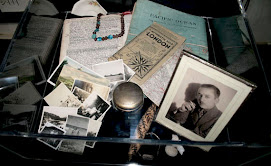
A performance essay with PowerPoint images and a display case of ‘memorabilia’ we presented The Hannah First Collection, 1919—1949 as part of the Zendai Museum of Modern Art's Intrude: Art & Life 366 project in Shanghai in November 2008.
The work charts my quest to discover and reconstruct the life and journeys of the early-to-mid 20th century anthropologist and traveller, Hannah First. Drawing on the traditions of the old-fashioned ‘family slide evening’ and the ‘illustrated lecture’ as well as the blog and social networking sites, I follow Hannah from Amsterdam to Oxford. Check out her trips to Ceylon and Singapore, and her fieldwork in Central Europe, Palestine and the palm-fringed Tikabar Islands of the Western Pacific. To do this, I use not only photographs, notebooks and artefacts, but also my own life experiences—finding considerable symmetry between myself and this intriguing and improbable anthropologist …

In the last part of the performance, following an important revelation about Hannah First, I move on to explore our preoccupation with nostalgia. Why has nostalgia become our preferred mode of reckoning not only with the present, but with a strangely depoliticised past?
Conceived, written & performed by Noëlle JanaczewskaDirected by Sally Sussman
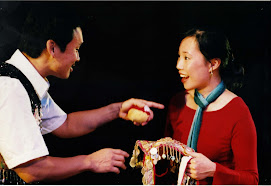
In Shanghai we presented a bilingual version of The Hannah First Collection, 1919—1949, in English and Chinese.
Chinese translation: Wu Chenyun
Chinese performer: Yao Mingde

This project was supported by the Australia-China Council.
Subscribe to:
Posts (Atom)
+Photo+Leah+McGirr+3.jpg)